

Blog
The Payroll Minefield: How to Protect Your Business from Costly Mistakes and Stay Compliant

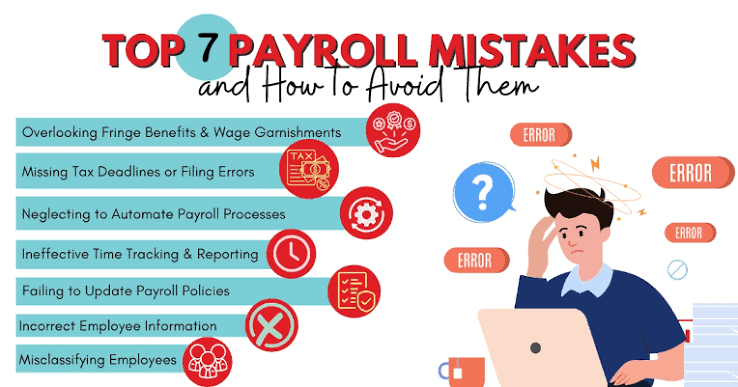
Ask any small business owner about their least favorite administrative task, and you will get a nearly universal answer: handling payroll.
On the surface, payroll seems straightforward—you calculate hours, cut checks, and pay your team for their hard work. But underneath that simple exterior lies a complex web of shifting tax codes, strict state regulations, and rigid filing deadlines.
Payroll isn’t just a weekly chore; it is one of the highest-stakes operations in your entire business. Get it right, and your team stays motivated and productive. Get it wrong, and you risk destroying employee trust, triggering painful state audits, and facing heavy financial penalties from the IRS. In fact, employment tax penalties account for a massive percentage of all IRS fines issued to small businesses every single year.
To help you protect your bottom line and keep your team smiling, here are the essential rules for navigating the payroll minefield safely.
1. Classify Your Team Correctly (W-2 vs. 1099)
The single most common payroll mistake business owners make is misclassifying workers. Labeling someone an independent contractor (1099) when they should legally be treated as an employee (W-2) is a primary target for state and federal audits.
- The Blueprint Shift: Understand the rules of behavioral and financial control. If you set their exact working hours, dictate how the work is done, provide their tools, and they perform a core function of your daily business operations, the IRS generally views them as a W-2 employee. Misclassification can result in you paying back-taxes, unpaid workers’ comp premiums, and steep penalties. When in doubt, audit your worker classifications with a financial professional.
2. Keep Your State Tax Registrations Immaculate
With the rise of remote work and hybrid teams, it is incredibly common for small businesses to hire workers who live in neighboring states. The moment you hire an employee who resides in a different state, you open up a new box of compliance requirements.
- The Blueprint Shift: You must register your business with that employee’s home state for withholding taxes and state unemployment insurance (SUI). Every state has its own unique tax rates, filing frequencies, and local paid family leave mandates. Failing to register correctly from day one can cause months of stressful back-tax calculations and administrative cleanup down the road.
3. Automate Your Tax Withholding and Deductions
Trying to calculate federal income tax, Social Security, Medicare, and local payroll taxes manually on a spreadsheet is a recipe for disaster. Tax brackets change, and the math leaves zero room for error.
- The Blueprint Shift: Ditch the manual spreadsheets completely. Implement modern, cloud-based payroll systems (like Gusto or QuickBooks Payroll) that automatically calculate, withhold, and pay your payroll taxes to the appropriate government agencies every single pay period. These systems keep up with changing tax limits automatically, ensuring you never accidentally underpay your liabilities.
4. Track Every Hour and Keep Meticulous Records
If your business employs hourly workers, tracking time accurately is non-negotiable. Relying on handwritten timesheets or verbal estimates often leads to “time theft” or, conversely, accidental underpayment of overtime—which can trigger severe Department of Labor disputes.
- The Blueprint Shift: Integrate a digital time-tracking system directly into your payroll ecosystem. Tools like QuickBooks Time or specialized mobile apps allow your team to clock in and out from specific jobsites or devices, tracking every minute transparently. Furthermore, the IRS requires you to keep all employment tax records on file for at least four years. Keep these records fully digitized and organized in the cloud so you are permanently audit-ready.
5. Don’t Treat Payroll Cash Flops Lightly
Because payroll is a massive, recurring cash outflow, it has a violent impact on your weekly liquidity. Running out of operating cash on payroll day is a nightmare scenario that forces owners to scramble, tap into high-interest personal loans, or delay payments to vital vendors.
- The Blueprint Shift: Build your payroll liability directly into your weekly cash flow forecasting model. Proactive business owners maintain a separate, dedicated “Payroll Reserve” bank account, transferring a fixed percentage of weekly revenue into it automatically. When pay day arrives, the money is already sitting there, completely protecting your core operational accounts.
Reclaim Your Fridays and Protect Your Peace of Mind
Your time as a business owner is best spent driving revenue, optimizing your operations, and leading your team—not wrestling with tax tables and payroll forms on a Friday afternoon.
If managing your team’s compensation has become a major source of compliance anxiety or administrative fatigue, you don’t have to carry that burden alone.
At BAMS Bookkeeping & Consulting, we handle the heavy lifting of backend financial management. We ensure your books are pristine, synchronize your time-tracking apps with your accounting ledgers, and help you structure compliant, automated payroll systems that scale seamlessly as your team grows.
Ready to get payroll running like clockwork? Schedule a free consultation with the BAMS team today.